Research
The Arnon Lab engineers programmable bionanomaterials by combining DNA nanotechnology, protein and peptide self-assembly, and external physical fields. Here we present several avenues of our research, all unified by a single challenge: how can precise molecular design be translated into functional materials across length scale?
DNA Origami Design & Nanocargo
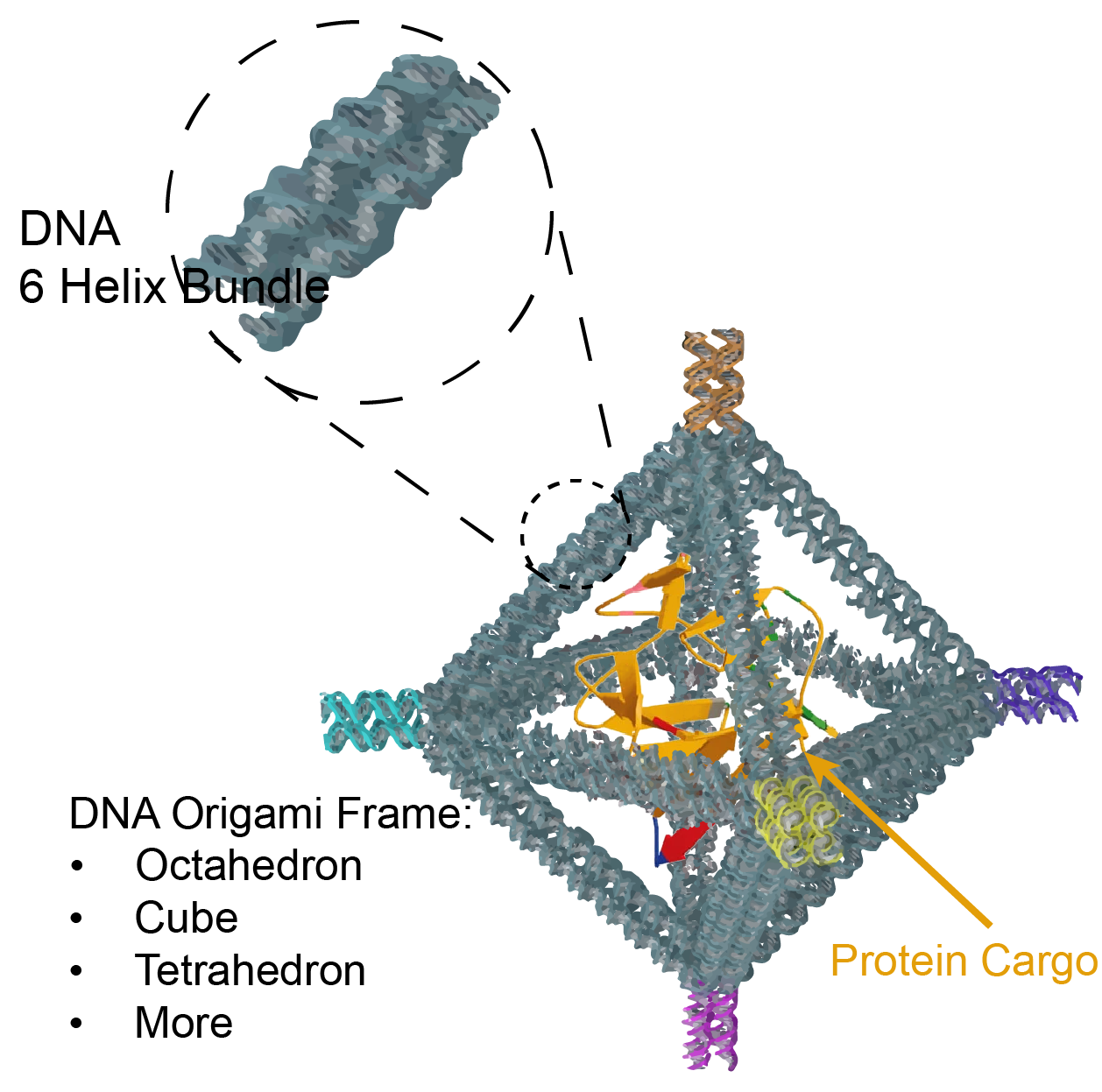
A DNA origami octahedral frame built from 6-helix bundle edges, carrying protein nanocargo at defined interior positions. Frames can also be designed as cubes, tetrahedra, and other geometries.
DNA origami exploits the programmable base-pairing of DNA to fold a long single-stranded scaffold (typically ~7–8 kb) into a precise nanoscale shape using hundreds of short "staple" strands. In the Arnon Lab, we design three-dimensional frame structures: octahedra, cubes, tetrahedra, and more with edge lengths of roughly 30 nm. These frames are not passive scaffolds; their edges and vertices can be functionalized with binding motifs including DNA complementary sticky ends, cell-adhesion peptides, protein-docking handles, and antibodies.
Each vertex of the origami frame is an addressable position: cargo (enzymes, growth factors, nanoparticles) can be docked at defined coordinates with nanometer precision. Because the frame geometry and the cargo positions are both programmable through DNA sequence design, we can independently tune the spatial arrangement of multiple functional molecules on a single scaffold, creating multi-component systems with controlled stoichiometry and geometry.
A key design goal is making these frames the repeating unit of larger assemblies. Each face of the origami frame displays single-stranded DNA "sticky ends" that direct frame-to-frame hybridization, allowing the nanoframes to self-assemble into ordered superlattice crystals with the nanocargo intact and precisely placed within the lattice.
Directed Delivery Systems
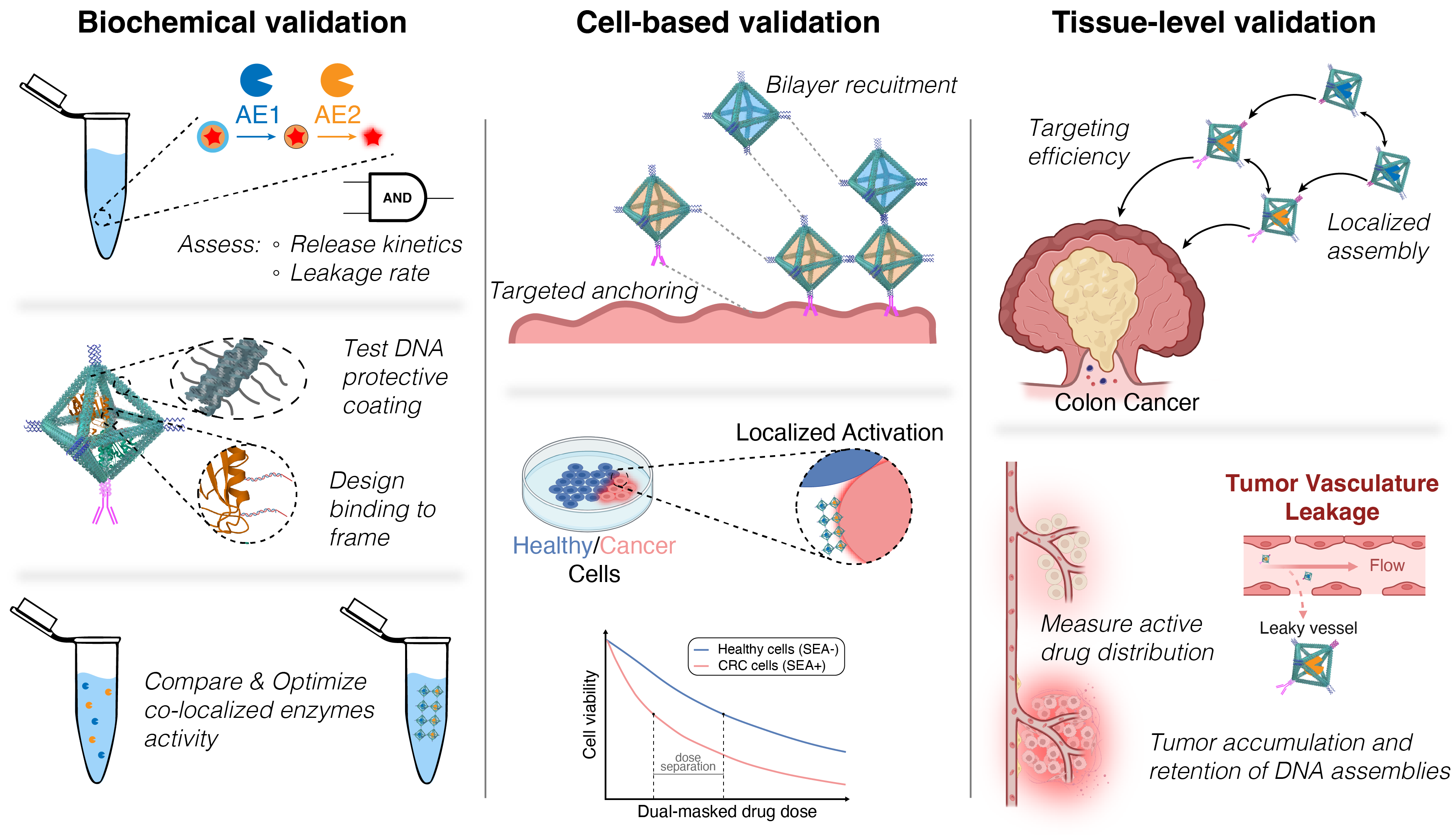
Three tiers of SEA platform validation: biochemical assays, cell-based assays, and tissue-level models.
A central challenge in cancer therapy is achieving spatial selectivity: activating a therapeutic agent precisely where it is needed, while sparing healthy tissue. The Arnon Lab is developing a platform called Spatial Enzymatic Activation (SEA) that uses DNA origami nanoframes to spatially program enzymatic activity at the target site.
The SEA platform is built on a molecular logic design in which therapeutic activation requires the co-localization of multiple enzymatic components. This approach decouples the site of delivery from the site of activation, providing a new layer of spatial control that is not achievable through conventional targeted delivery.
The platform is validated at multiple levels of biological complexity, from solution-phase assays to cell-based models and tissue-level experiments, demonstrating robust spatial selectivity across biologically relevant conditions.
Hierarchical Multiscale Materials
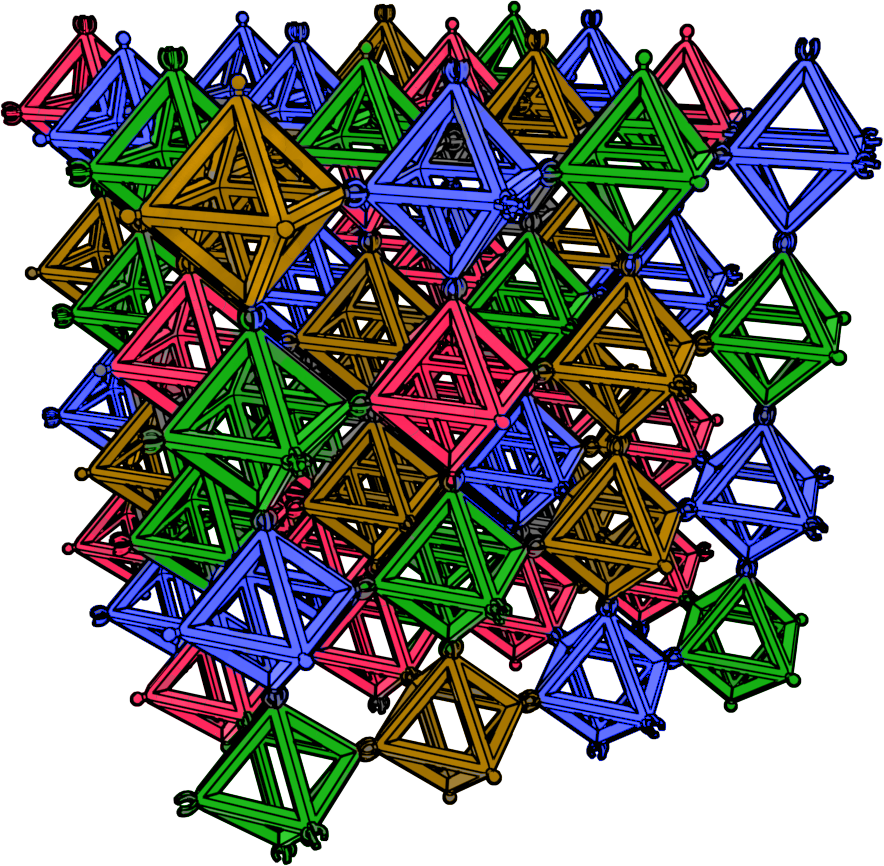
A DNA origami superlattice crystal: octahedral frames self-assembled through vertex-to-vertex DNA hybridization into a simple cubic lattice. Each frame is addressable and can carry distinct nanocargo.
Some of the most extraordinary materials in nature — bone, nacre, spider silk, wood — derive their properties not from any single molecule, but from the way those molecules are hierarchically organized across length scales. Bone is simultaneously stiff and tough because collagen fibrils, mineral platelets, and fiber bundles are precisely arranged at every scale from nanometers to millimeters. These properties are emergent from the organization and architecture, not composition alone.
Synthetic materials rarely achieve this. Most are either molecularly precise but limited to the nanoscale, or macroscopically ordered but lacking molecular control. Artificial organization at multiple length scales is extremely challenging. In the Arnon Lab, we aim to bridge this gap by programming hierarchy from the bottom up. Using DNA origami frames as building blocks, we engineer superlattice crystals whose symmetry, lattice parameters, and embedded cargo are all set by molecular design. Frame geometry, crystal packing, surface patterning, and acoustic alignment are all aimed to access desired mechanical, optical, and biological properties.
The goal is not simply to mimic nature, but to use its design principles as a blueprint for creating entirely new classes of programmable bionanomaterials with properties tunable across six orders of magnitude in length scale.
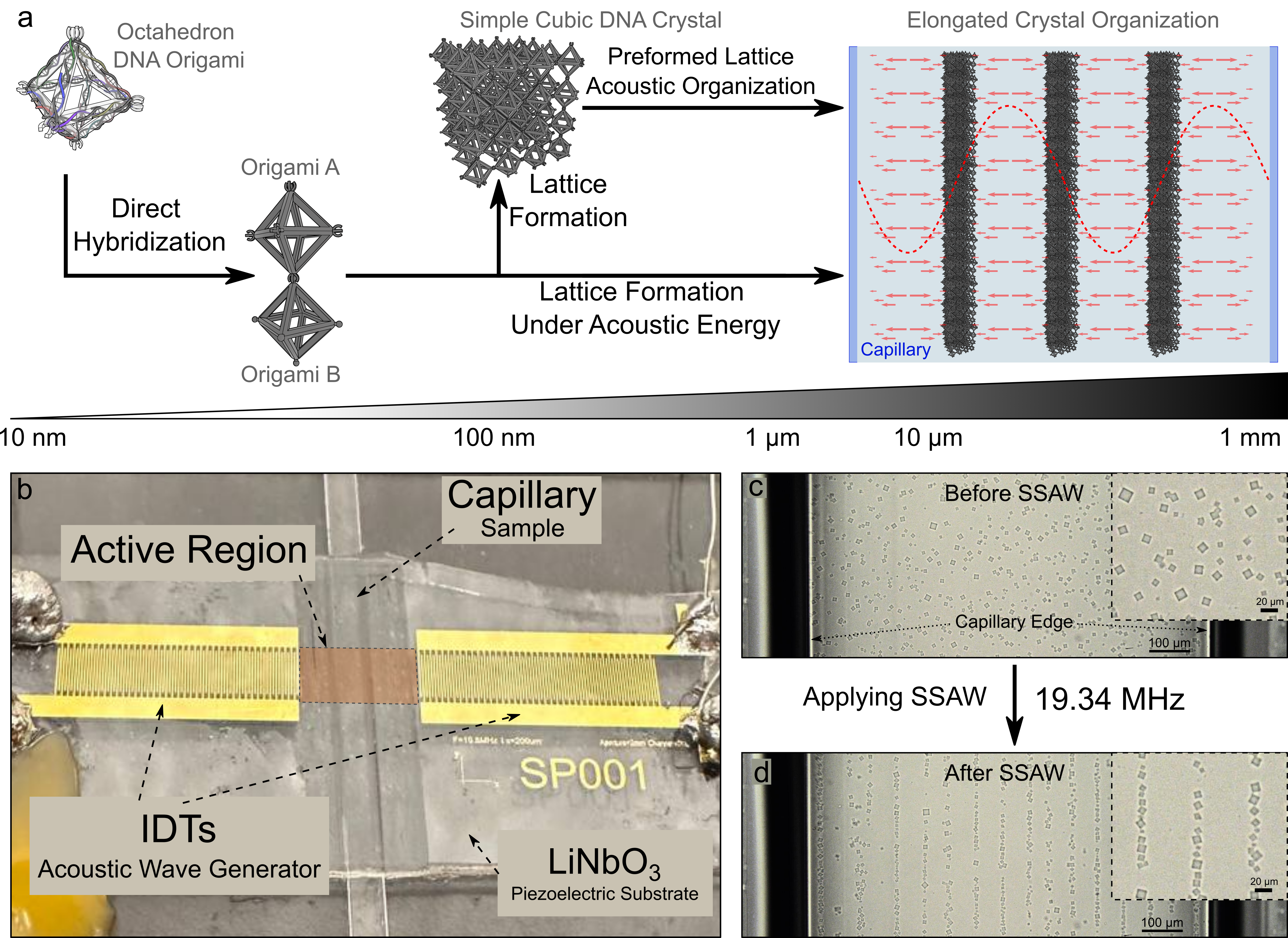
Acoustic organization: DNA octahedra form simple cubic crystals, which are then organized by surface standing acoustic waves (SSAW) into millimeter-scale 1D chains along acoustic pressure nodes.